peco
Simplistic interactive filtering tool
About peco
This large README is shown as a plain-text preview. Read the full README at the source
# peco
Simplistic interactive filtering tool
*NOTE*: If you are viewing this on GitHub, this document refers to the state of `peco` in whatever current branch you are viewing, _not_ necessarily the state of a currently released version. Please make sure to checkout the [Changes](./Changes) file for features and changes.
> If you use peco, please consider sponsoring the authors of this project from the "Sponsor" button on the project page at https://github.com/peco/peco. Sponsorship plans start at $1 :)
# Description
`peco` (pronounced *peh-koh*) is based on a python tool, [percol](https://github.com/mooz/percol). `percol` was darn useful, but I wanted a tool that was a single binary, and forget about python. `peco` is written in Go, and therefore you can just grab [the binary releases](https://github.com/peco/peco/releases) and drop it in your $PATH.
`peco` can be a great tool to filter stuff like logs, process stats, find files, because unlike grep, you can type as you think and look through the current results.
For basic usage, continue down below. For more cool elaborate usage samples, [please see the wiki](https://github.com/peco/peco/wiki/Sample-Usage), and if you have any other tricks you want to share, please add to it!
## Demo
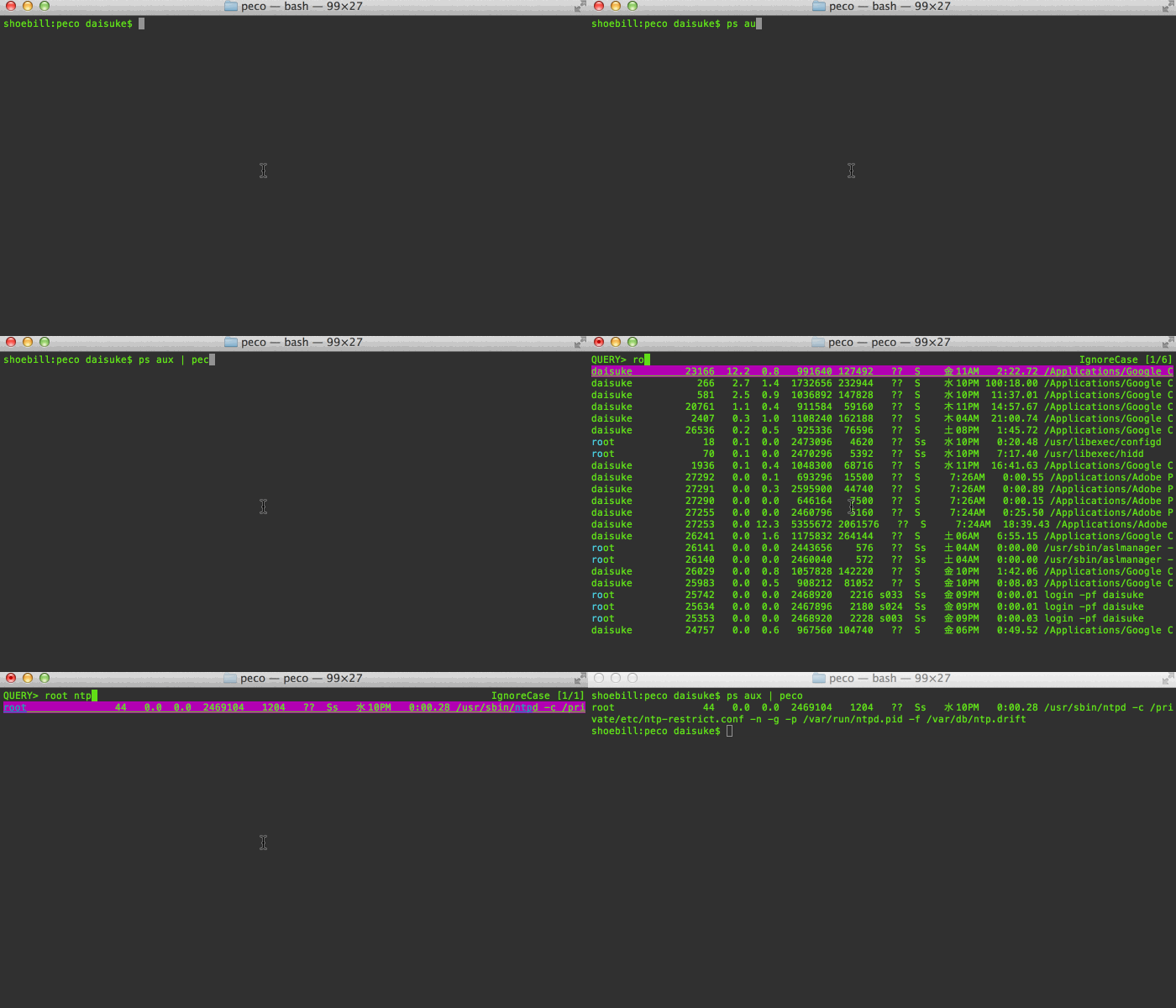
Demos speak more than a thousand words! Here's me looking for a process on my mac. As you can see, you can page through your results, and you can keep changing the query:
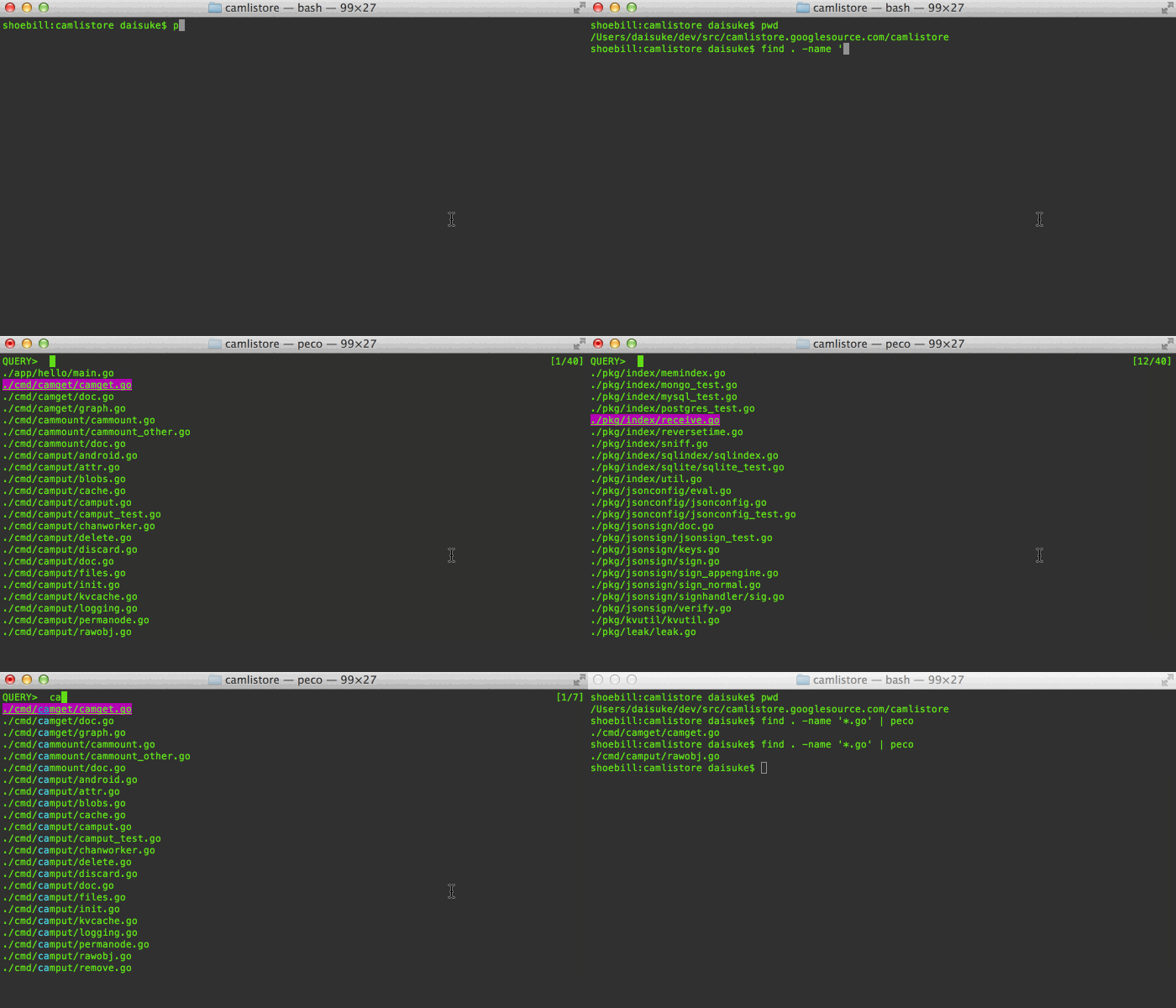
Here's me trying to figure out which file to open:
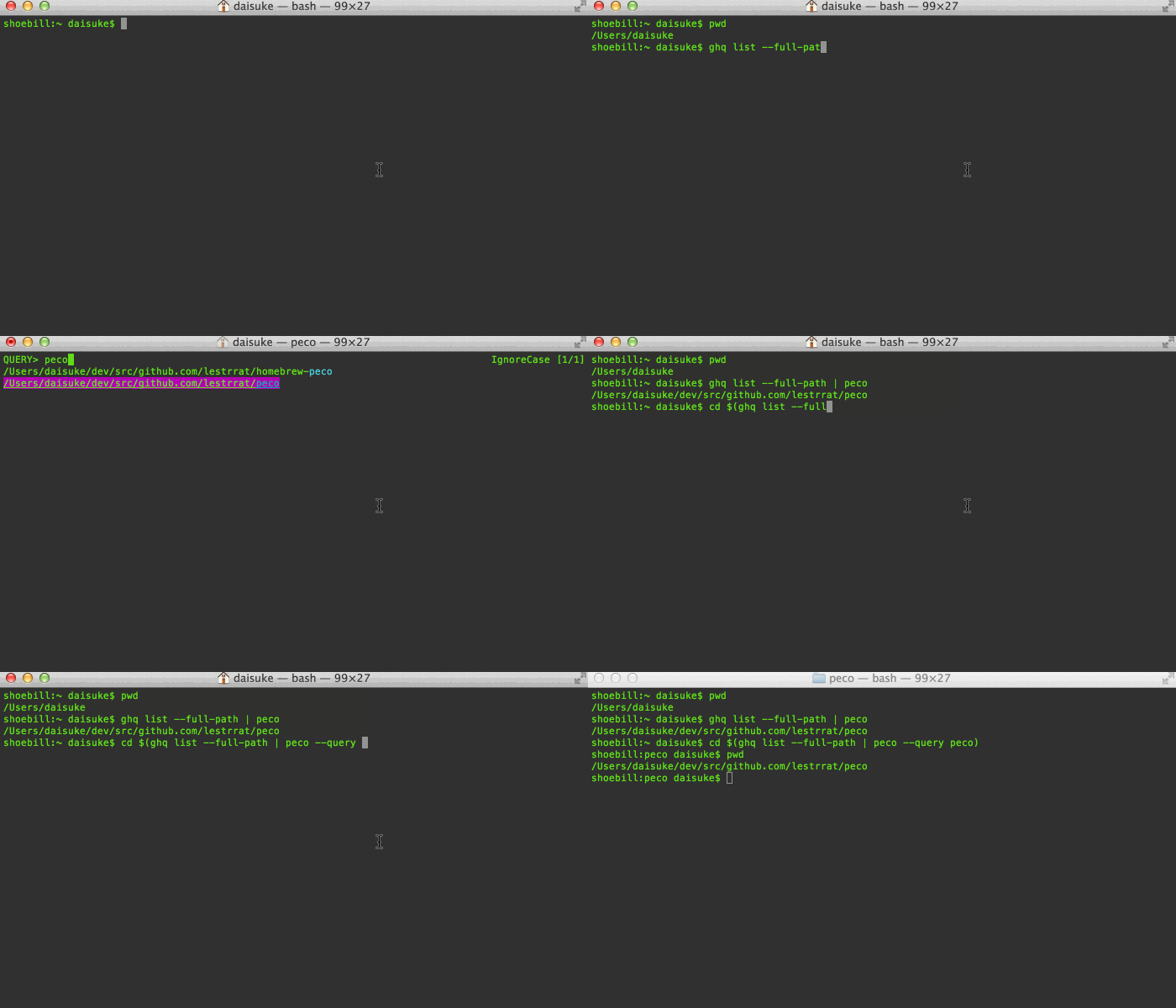
When you combine tools like zsh, peco, and [ghq](https://github.com/motemen/ghq), you can make managing/moving around your huge dev area a piece of cake! (this example doesn't use zsh functions so you can see what I'm doing)
# Features
## Incremental Search
Search results are filtered as you type. This is great to drill down to the
line you are looking for
Multiple terms turn the query into an "AND" query:
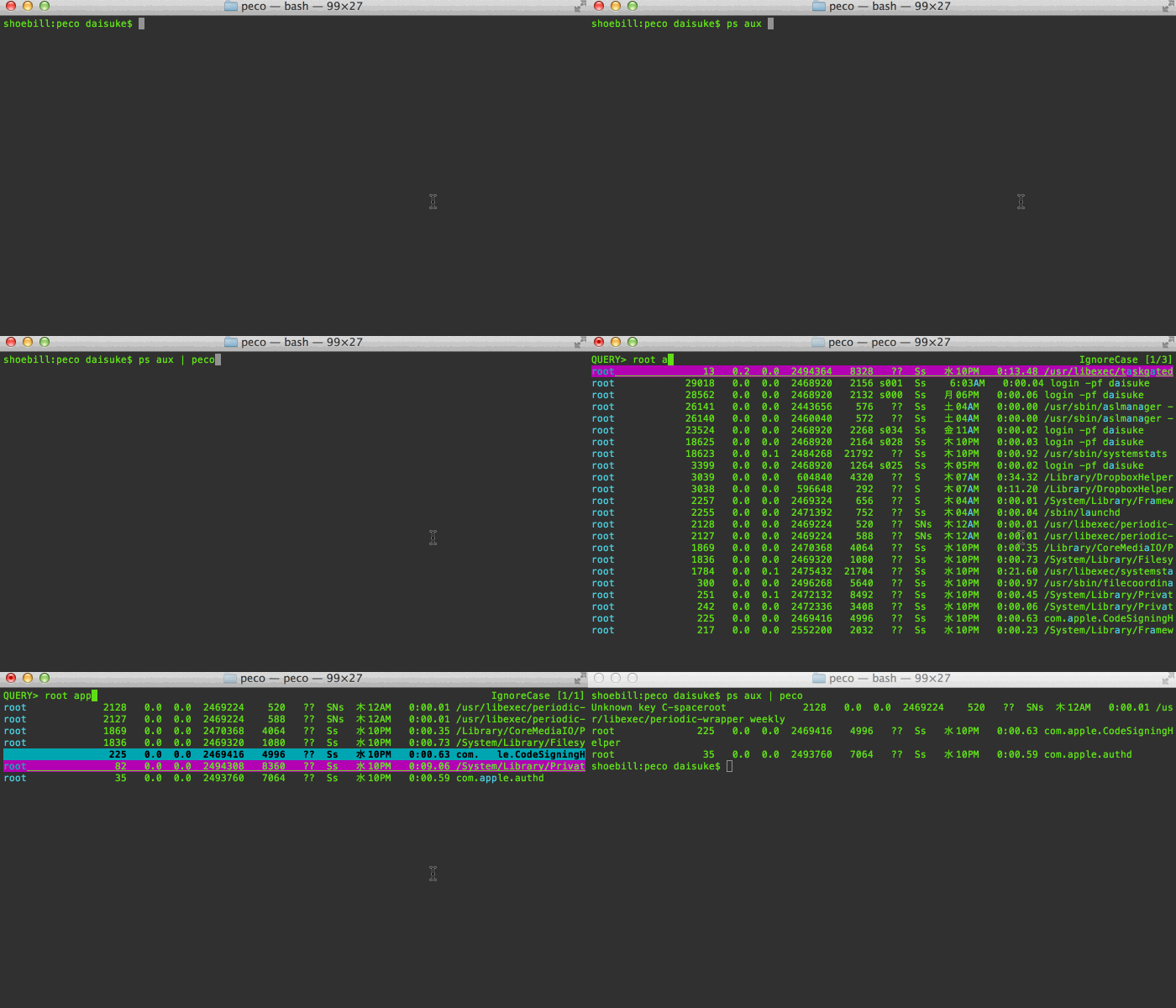
When you find that line that you want, press enter, and the resulting line
is printed to stdout, which allows you to pipe it to other tools
## Negative Matching
You can exclude lines from the results by prefixing a term with `-`. For example, the query `SSO -tests -javadoc` shows lines matching "SSO" that do NOT contain "tests" or "javadoc".
| Query | Meaning |
|-------|---------|
| `foo -bar` | Lines matching "foo" but not containing "bar" |
| `-foo -bar` | All lines not containing "foo" or "bar" |
| `\-foo` | Literal match for "-foo" (escaped with backslash) |
| `-` | Literal match for a hyphen character |
Negative matching works with all built-in filters (IgnoreCase, CaseSensitive, SmartCase, Regexp, IRegexp, and Fuzzy). For the Fuzzy filter, negative terms use regexp-based exclusion rather than fuzzy matching. External custom filters receive the query as-is and are responsible for their own parsing.
The `-` prefix is configurable. Pass `--negation-prefix=` (an empty value) to match every term as typed, which is what you want when your input is full of hyphens, such as shell history. Pass another character, for example `--negation-prefix='!'`, to keep negative matching while leaving hyphens alone. The same setting lives in the configuration file as [`NegationPrefix`](#negationprefix).
Only positive terms produce match highlighting. Lines matched solely by negative exclusion (e.g. an all-negative query like `-foo`) are shown without highlighting.
**Note:** When using the SmartCase filter with negative terms, results may be incomplete if the query transitions from all-lowercase to mixed-case (e.g. typing `foo -bar` then adding an uppercase character). If this happens, clearing the query and retyping it will produce the correct results.
**Upgrading from v0.5.x:** In v0.5.x, a query like `test -v` matched lines containing both "test" and literal "-v". From v0.6.0 onwards, `-v` is treated as a negative term, so the query matches "test" while excluding lines containing "v". To search for a literal hyphen-prefixed term, escape it with a backslash (e.g. `\-v`).
## Select Multiple Lines
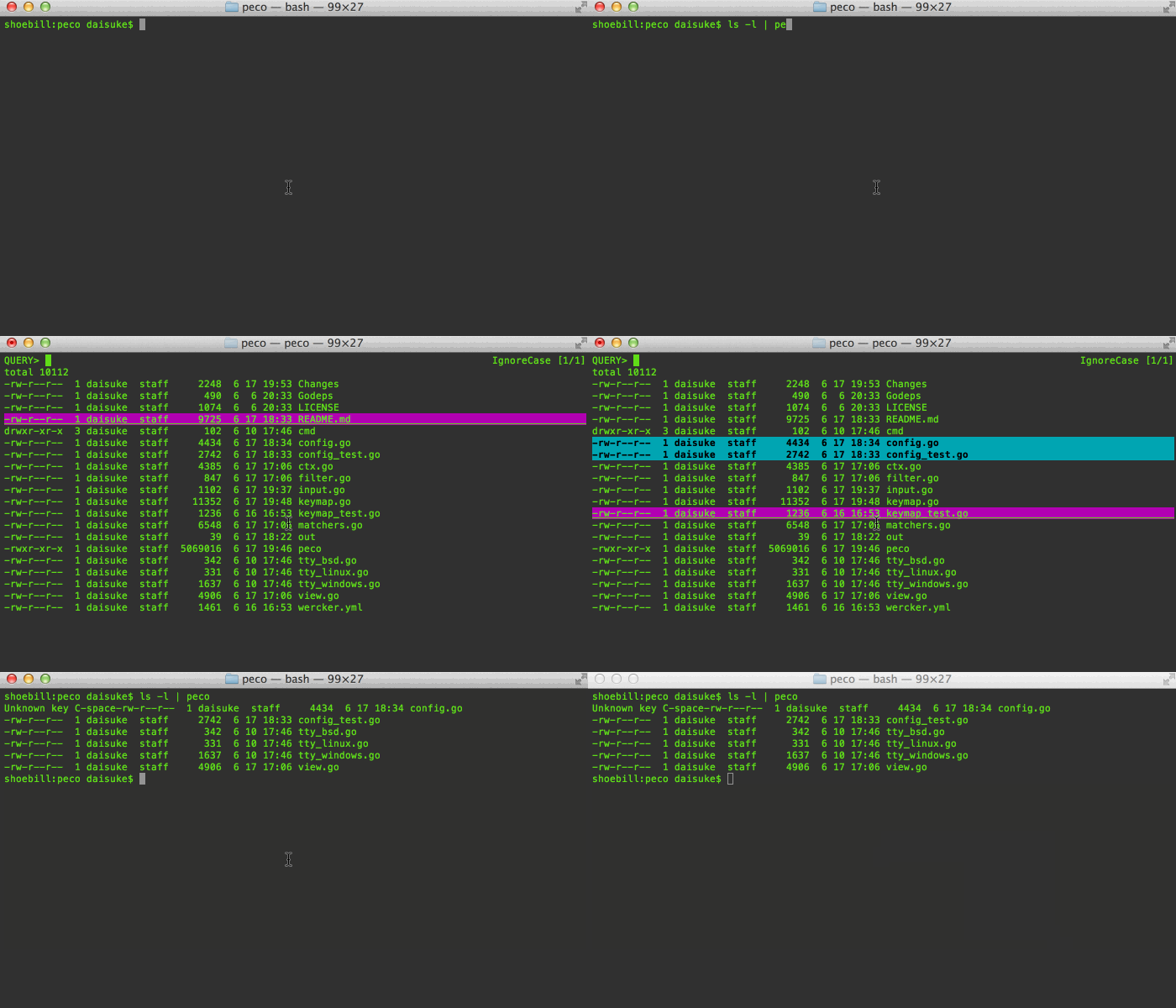
You can select multiple lines! (this example uses C-Space)
## Select Range Of Lines
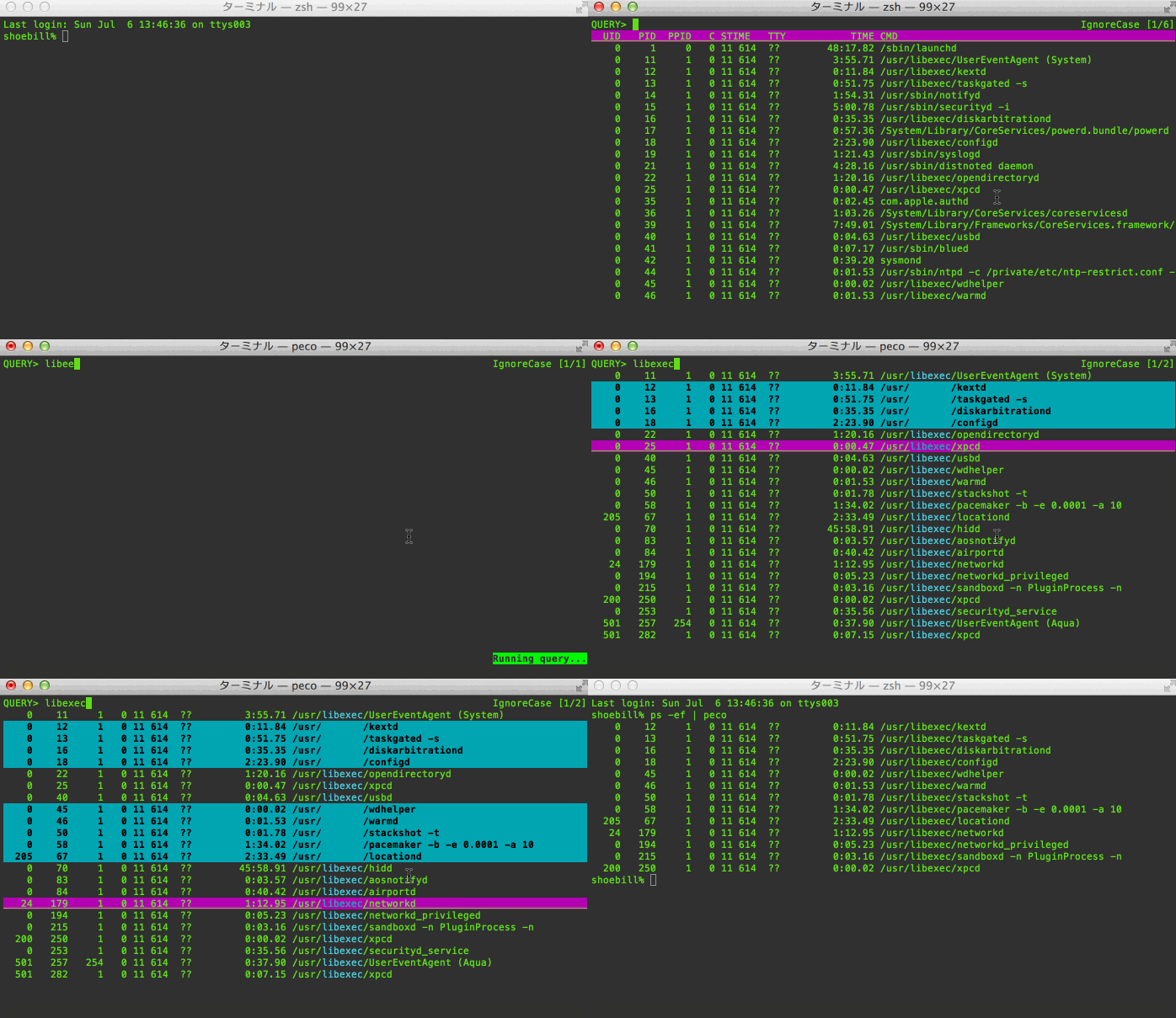
Not only can you select multiple lines one by one, you can select a range of lines (Note: The ToggleRangeMode action is not enabled by default. You need to put a custom key binding in your config file)
## Select Filters
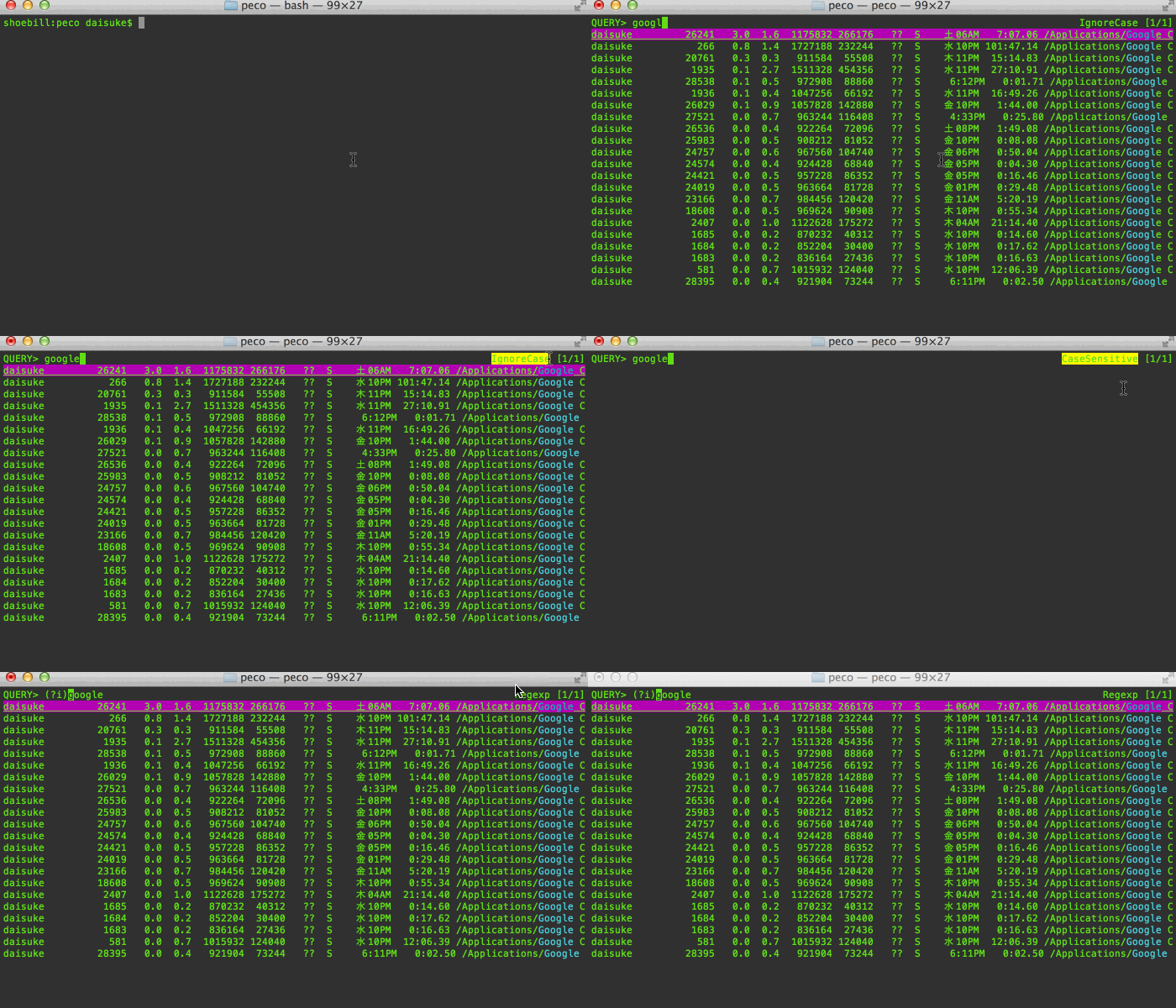
Different types of filters are available. Default is case-insensitive filter, so lines with any case will match. You can toggle between IgnoreCase, CaseSensitive, SmartCase, Regexp case insensitive, Regexp and Fuzzy filters.
The SmartCase filter uses case-*insensitive* matching when all of the queries are lower case, and case-*sensitive* matching otherwise.
The Regexp filter allows you to use any valid regular expression to match lines.
The Fuzzy filter allows you to find matches using partial patterns. For example, when searching for `ALongString`, you can enable the Fuzzy filter and search `ALS` to find it. The Fuzzy filter uses smart case search like the SmartCase filter. With the `FuzzyLongestSort` flag enabled in the configuration file, it does a smarter match. It sorts the matched lines by the following precedence: 1. longer substring, 2. earlier (left positioned) substring, and 3. shorter line.
If you only use a few of these, the [`Filters`](#filters) configuration section and the `--filter` command line option cut the rotation down to the filters you name, in the order you name them.
## Multi-Stage Filtering (Freeze Results)
You can "freeze" the current filter results, clear the query, and continue filtering on top of the frozen results. This enables multi-stage filtering workflows -- for example, first filter by file extension, freeze, then filter by filename.
Use `peco.FreezeResults` to snapshot the current results and clear the query. Use `peco.UnfreezeResults` to discard the frozen results and revert to the original input. These actions are **not bound to any key by default** -- you need to add keybindings in your config file:
```json
{
"Keymap": {
"M-f": "peco.FreezeResults",
"M-u": "peco.UnfreezeResults"
}
}
```
You can freeze multiple times to progressively narrow down results. Unfreezing always reverts back to the original unfiltered input.
**Example:** Given this input via `ls | peco`:
```
QUERY>
app.go
app_test.go
filter.go
filter_test.go
main.go
readme.md
```
Type `_test` to filter:
```
QUERY> _test
app_test.go
filter_test.go
```
Press `M-f` to freeze. The two test files become the new base and the query clears:
```
QUERY>
app_test.go
filter_test.go
```
Now type `filter` to search within the frozen results:
```
QUERY> filter
filter_test.go
```
Press `Enter` to select `filter_test.go`, or press `M-u` to unfreeze and return to the original full list.
## Horizontal Scrolling
When input lines are longer than the terminal width, they are clipped at the edge of the screen. You can scroll horizontally to reveal the rest of the line using the `peco.ScrollLeft` and `peco.ScrollRight` actions. These actions are **not bound to any key by default** -- you need to add keybindings in your config file:
```json
{
"Keymap": {
"ArrowLeft": "peco.ScrollLeft",
"ArrowRight": "peco.ScrollRight"
}
}
```
Each scroll moves by half the terminal width.
If your input contains very long lines (e.g. minified files) and they do not appear at all, try increasing `MaxScanBufferSize` in your config. The default is 256 (KB), which limits the maximum length of a single input line.
## ANSI Color Support
By default (`--color=auto`), peco parses ANSI SGR (Select Graphic Rendition) escape sequences from the input and renders the original colors in the terminal. This lets you pipe colored output from tools like `git log --color`, `rg --color=always`, or `ls --color` through peco while preserving the visual formatting.
```
git log --color=always | peco
rg --color=always pattern | peco
ls --color=always | peco
```
To disable ANSI color rendering, use `--color=none`.
peco uses two independent color layers, both supporting 8 named colors, 256-color, and 24-bit truecolor. The first is peco's own **UI styling** — selection highlighting, match highlighting, prompt colors, etc. — configured via the `Style` section in the config file (see [Styles](#styles)). UI styling is always active and is not affected by the `--color` flag. The second is **input ANSI colors** — escape sequences already present in the piped input from tools like `git log --color`. This layer is controlled by the `--color` flag described above.
When input ANSI color support is enabled, filtering and matching operate against the **stripped** (plain text) version of each line, so escape codes do not interfere with your queries. Input ANSI colors are displayed as the **base layer**; peco's own UI styling takes precedence. Selected lines' output preserves the **original** ANSI codes, so downstream tools receive colored text.
ANSI color support can be controlled via the configuration file (see [Color](#color) under Global configuration).
## Context Lines (Zoom In/Out)
When filtering results (e.g. searching for "error" in a log file), you often need to see the surrounding lines to understand the context. peco supports expanding filtered results to show context lines around each match, similar to `grep -C`.
Two actions are available:
- **`peco.ZoomIn`** — Expands the current filtered view by showing 3 lines of context (before and after) around every matched line. Overlapping context ranges are merged automatically. Context lines are displayed with the `Context` style (bold by default) to visually distinguish them from matched lines.
- **`peco.ZoomOut`** — Collapses back to the original filtered view, restoring the cursor position.
These actions are **not bound to any key by default**. Add keybindings in your config file:
```json
{
"Keymap": {
"C-o": "peco.ZoomIn",
"C-i": "peco.ZoomOut"
}
}
```
ZoomIn only works when there is an active filter query; if you are viewing the unfiltered source, it is a no-op. You cannot zoom in twice — zooming in while already zoomed shows a status message. The cursor position is preserved: after ZoomIn, the cursor stays on the same matched line; after ZoomOut, it returns to where it was before zooming. Context lines cannot be selected — only the original matched lines participate in selection. The `Context` style can be customized in the config file (see [Styles](#styles)).
## Selectable Layout
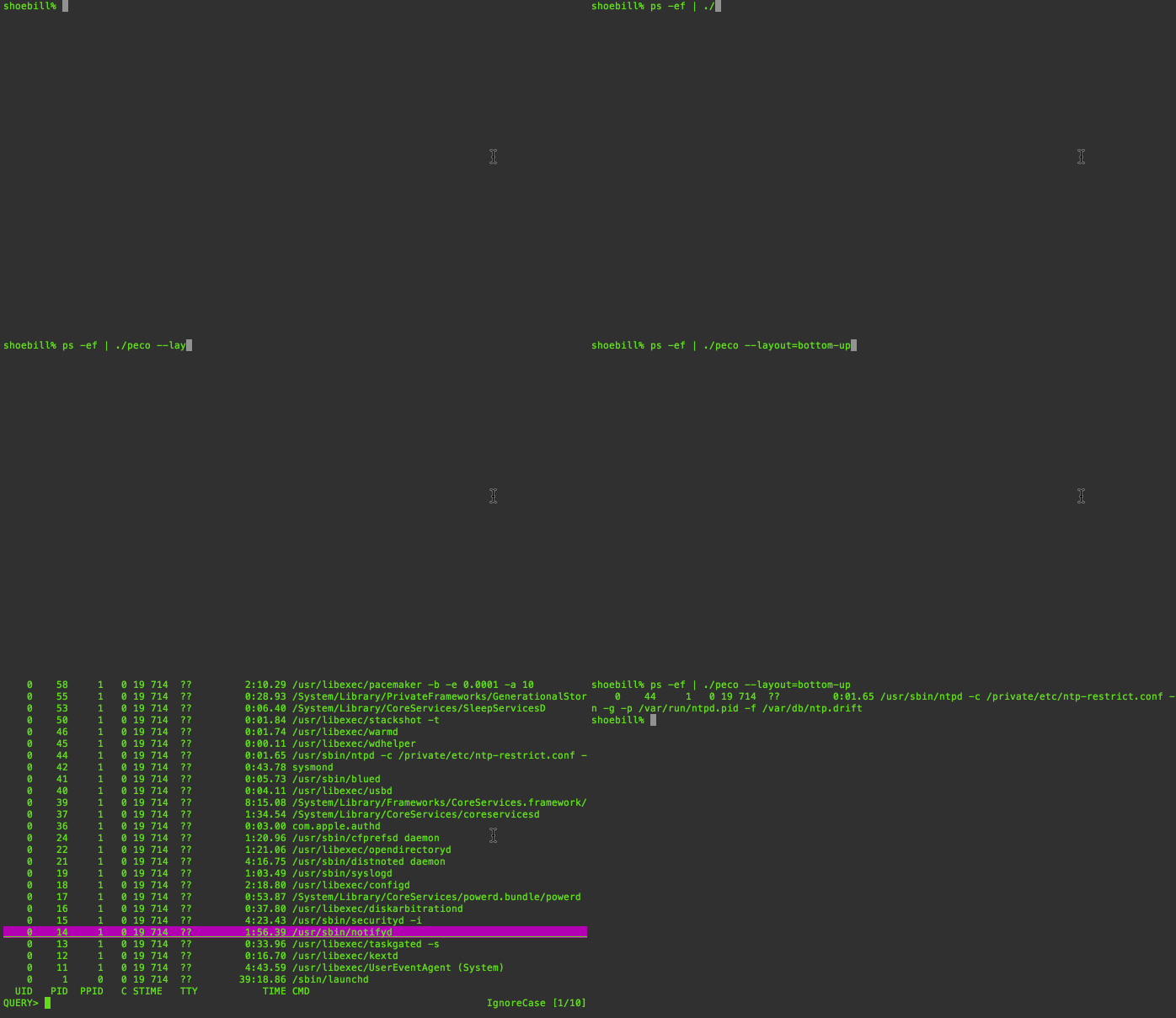
As of v0.2.5, if you would rather not move your eyes off of the bottom of the screen, you can change the screen layout by either providing the `--layout=bottom-up` command line option, or set the `Layout` variable in your configuration file
## Inline Mode (--height)
By default peco takes over the entire terminal screen using the alternate screen buffer. With `--height`, peco renders inline at the bottom of the terminal, preserving your scroll history above. This is similar to fzf's `--height` option.
```
# Render with 5 result lines at the bottom of the terminal
ls | peco --height 5
# Use 40% of the terminal height
ls | peco --height 40%
```
All layout modes (`top-down`, `bottom-up`, `top-down-query-bottom`) work with `--height`. See [--height](#--height-numpercentage) for details.
## Works on Windows!
I have been told that peco even works on windows :) Look ma! I'm not lying!

# Installation
### Just want the binary?
Go to the [releases page](https://github.com/peco/peco/releases), find the version you want, and download the zip file. Unpack the zip file, and put the binary to somewhere you want (on UNIX-y systems, /usr/local/bin or the like). Make sure it has execution bits turned on. Yes, it is a single binary! You can put it anywhere you want :)
_THIS IS THE RECOMMENDED WAY_ (except for macOS homebrew users)
### macOS (Homebrew, Scarf)
If you're on macOS and want to use homebrew:
```
brew install peco
```
or with Scarf:
```
scarf install peco
```
### Debian and Ubuntu based distributions (APT, Scarf)
There is an official Debian package that can be installed via APT:
```
apt install peco
```
or with Scarf:
```
scarf install peco
```
### Void Linux (XBPS)
```
xbps-install -S peco
```
### Arch Linux
There is an official Arch Linux package that can be installed via `pacman`:
```
pacman -Syu peco
```
### Windows (Chocolatey NuGet Users)
There's a third-party [peco package available](https://chocolatey.org/packages/peco) for Chocolatey NuGet.
```
C:\> choco install peco
```
### X-CMD (Linux, macOS, Windows WSL, Windows GitBash)
peco is available from [x-cmd](https://www.x-cmd.com).
To install peco, run:
```shell
x env use peco
```
### Linux / macOS / Windows (Conda, Mamba, Pixi)
`conda`, `mamba` and `pixi` are platform-agnostic package managers for conda-format packages.
This means that the same command can be used to install peco across Windows, MacOS, and Linux.
```
# conda
conda install -c conda-forge peco
# mamba
mamba install -c conda-forge peco
# install user-globally using pixi
pixi global install peco
```
### Using go install
If you have a Go toolchain installed, you can install peco with:
```
go install github.com/peco/peco/cmd/peco@latest
```
### Building peco yourself
Clone the repository and run:
```
make build
```
This will build the binary into `dist/peco_<os>_<arch>/peco`. Copy it to somewhere in your `$PATH`.
# Command Line Options
### -h, --help
Display a help message
### --version
Display the version of peco
### --query <query>
Specifies the default query to be used upon startup. This is useful for scripts and functions where you can figure out beforehand what the most likely query string is.
### --print-query
When exiting, prints out the query typed by the user as the first line of output. The query will be printed even if there are no matches, if the program is terminated normally (i.e. enter key). On the other hand, the query will NOT be printed if the user exits via a cancel (i.e. esc key).
### --rcfile <filename>
Pass peco a configuration file, which currently must be a JSON file. If unspecified it will try a series of files by default. See `Configuration File` for the actual locations searched.
### -b, --buffer-size <num>
Limits the buffer size to `num`. This is an important feature when you are using peco against a possibly infinite stream, as it limits the number of lines that peco holds at any given time, preventing it from exhausting all the memory. By default the buffer size is unlimited.
### --null
Changes how peco interprets incoming data. When this flag is set, you may insert NUL ('\0') characters in your input. Anything before the NUL character is treated as the string to be displayed by peco and is used for matching against user query. Anything after the NUL character is used as the "result": i.e., when peco is about to exit, it displays this string instead of the original string displayed.
[Here's a simple example of how to use this feature](https://gist.github.com/mattn/3c7a14c1677ecb193acd)
### --initial-index
Specifies the initial line position upon start up. E.g. If you want to start out with the second line selected, set it to "1" (because the index is 0 based).
### --initial-filter `IgnoreCase|CaseSensitive|SmartCase|IRegexp|Regexp|Fuzzy`
Specifies the initial filter to use upon start up. You should specify the name of the filter like `IgnoreCase`, `CaseSensitive`, `SmartCase`, `IRegexp`, `Regexp` and `Fuzzy`. Default is `IgnoreCase`.
### --filter `name`
Registers only the named filter, instead of all of them. Repeat the option to register several filters; `peco.RotateFilter` (bound to `C-r` by default) then rotates through them in the order you gave, and no others:
```
peco --filter IgnoreCase --filter Fuzzy
```
The name is a built-in filter (`IgnoreCase`, `CaseSensitive`, `SmartCase`, `IRegexp`, `Regexp`, `Fuzzy`) or a key from the `CustomFilter` section of your configuration file. A name that matches neither makes peco exit with an error that lists the names it accepts.
This option takes precedence over the configuration file's `Filters` section. `--initial-filter` must name one of the filters you registered.
### --negation-prefix `string`
Specifies the query term prefix that excludes the lines it matches (see [Negative Matching](#negative-matching)). The default is `-`.
An empty value turns negative matching off, so every term is matched as typed:
```
history | peco --negation-prefix=
```
A query of `--some-option` then matches lines containing `--some-option`, instead of excluding lines containing `-some-option`. Any other value moves negation to that prefix and leaves hyphens alone:
```
peco --negation-prefix='!'
```
Write the value with `=` as shown. Without it, a value starting with `-` is read as another option. When specified, this takes precedence over the configuration file's `NegationPrefix` section.
### --prompt
Specifies the query line's prompt string. When specified, takes precedence over the configuration file's `Prompt` section. The default value is `QUERY>`.
### --layout `top-down|bottom-up|top-down-query-bottom`
Specifies the display layout. Default is `top-down`, where query prompt is at the top, followed by the list, then the system status message line. `bottom-up` changes this to the list first (displayed in reverse order), the query prompt, and then the system status message line. `top-down-query-bottom` places the list at the top with the query prompt at the bottom.
For `percol` users, `--layout=bottom-up` is almost equivalent of `--prompt-bottom --result-bottom-up`.
### --select-1
When specified *and* the input contains exactly 1 line, peco skips prompting you for a choice, and selects the only line in the input and immediately exits.
If there are multiple lines in the input, the usual selection view is displayed.
### --exit-0
When specified and the input is empty (zero lines), peco exits immediately with status 1 without displaying the selection view.
### --select-all
When specified, peco selects all input lines and immediately exits without displaying the selection view.
### --on-cancel `success|error`
Specifies the exit status to use when the user cancels the query execution.Frequently Asked Questions
What is peco?
peco is a Utilities library for the Go programming language. Simplistic interactive filtering tool
How many GitHub stars does peco have?
peco has 7,915 GitHub stars in the directory's latest synchronization.
How do I install peco?
Install peco with the Go module system using `go get peco/peco`. Check the repository for the current installation instructions.
What category does peco belong to?
peco is listed under Utilities, specifically Utilities.